The Challenge
Zinc Oxide (ZnO) is a promising photocatalyst for water purification, but its efficiency is limited by rapid electron-hole recombination.
The Innovation: Chemical Hardness Tuning
I hypothesized that doping ZnO with “Chemically Hard” elements (like $Al^{3+}$ and $Sr^{2+}$) would improve the adsorption of hard species like water and oxygen, thereby enhancing catalytic turnover.
Key Findings
- Morphology Tuning: Aliovalent doping ($Al^{3+}$) transformed ZnO from Nanorods to Nanoparticles due to polarity-induced growth modulation.
- Performance: Al-ZnO achieved a 91.25% degradation rate of Methyl Orange (MO) dye, compared to just 40% for pure ZnO.
- Correlation: Established a direct trend between the Pearson Hardness of the dopant and photocatalytic activity: $Al > Sr > Cr > Ni > Zn$.
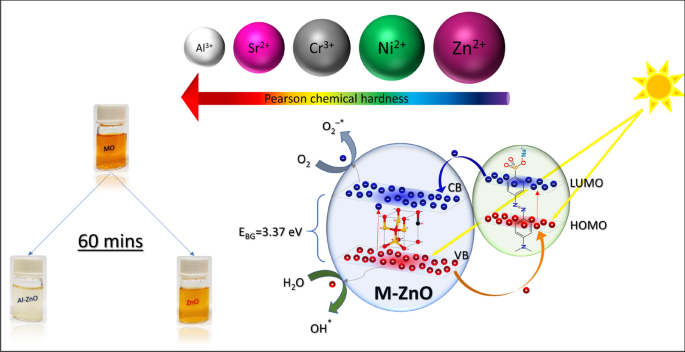
Figure 1: Schematic of the electron transfer mechanism in doped ZnO nanostructures.