The Challenge
Zinc-air batteries are a promising alternative to Lithium-ion, but they suffer from sluggish oxygen reduction/evolution reactions (ORR/OER). Commercial catalysts like Platinum (Pt) are expensive and unstable.
1. Synthesis: The “Black Powder” Challenge
Incorporating volatile alkali metals (like Potassium) into the Perovskite lattice is notoriously difficult due to their high vapor pressure at calcination temperatures ($>800^{\circ}C$).
I solved this by developing a low-temperature ($265^{\circ}C$) hydrothermal route, effectively “trapping” the Potassium ions within the lattice.
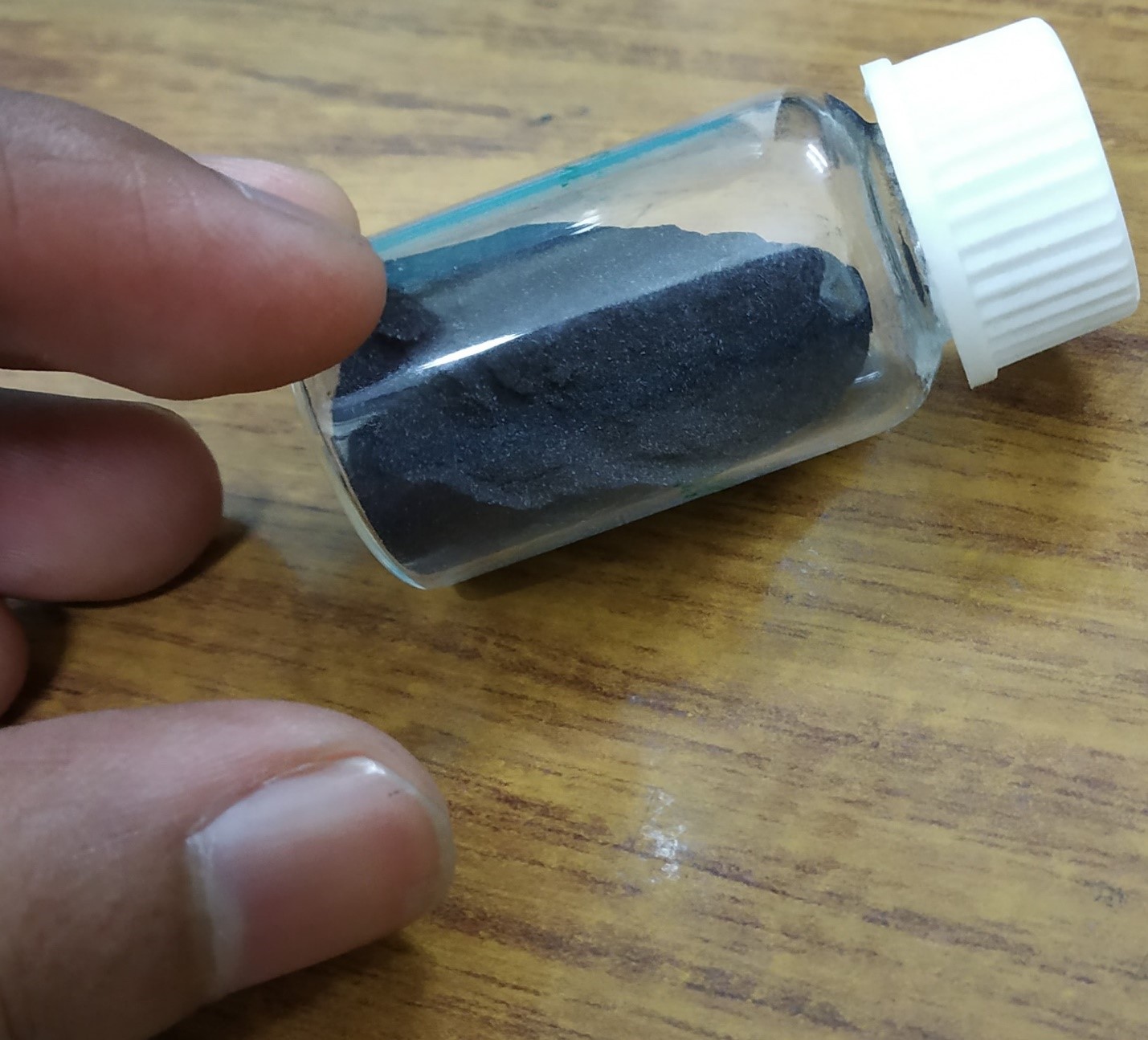
Figure 1: 50 gram-scale batch of phase-pure LKMO microcubes synthesized via the optimized hydrothermal protocol.
2. Advanced Characterization (PFM)
To verify the ferroelectric domains and surface potential, I conducted Piezo-Force Microscopy (PFM) on individual microcubes.
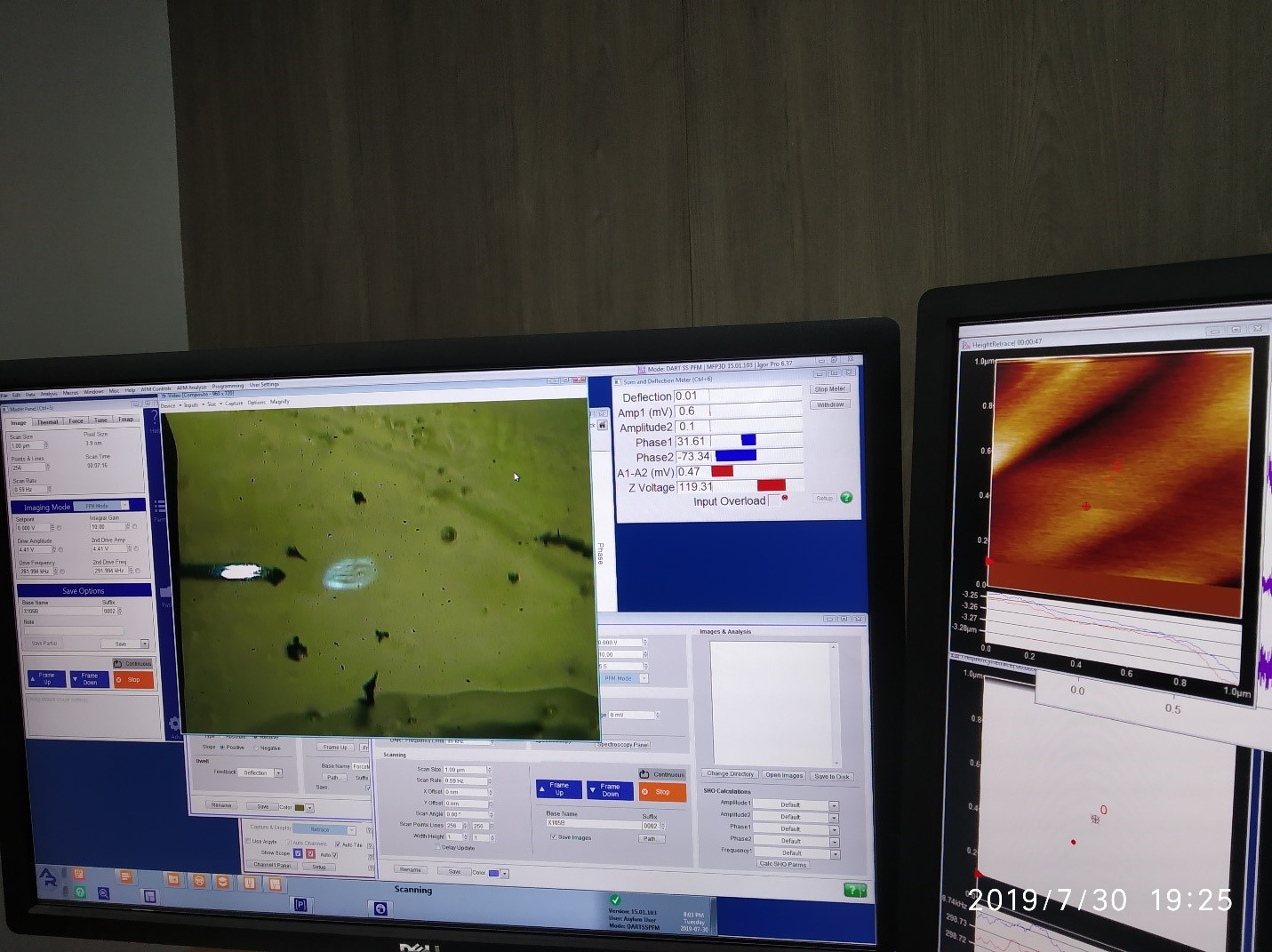
Figure 2: Conducting PFM in an AFM instrument on top of a single LKMO microcube to study electromechanical coupling.
3. Battery Performance (Zinc-Air)
I applied these microcubes as the air-cathode catalyst in a rechargeable Zinc-Air battery.
- Bifunctionality: The catalyst showed a half-wave onset potential of 0.78 V for ORR and an onset potential of 1.66 V for OER.
- Stability: The battery operated for 1000 cycles (100 hours) with no visible sign of degradation, outperforming traditional catalysts.
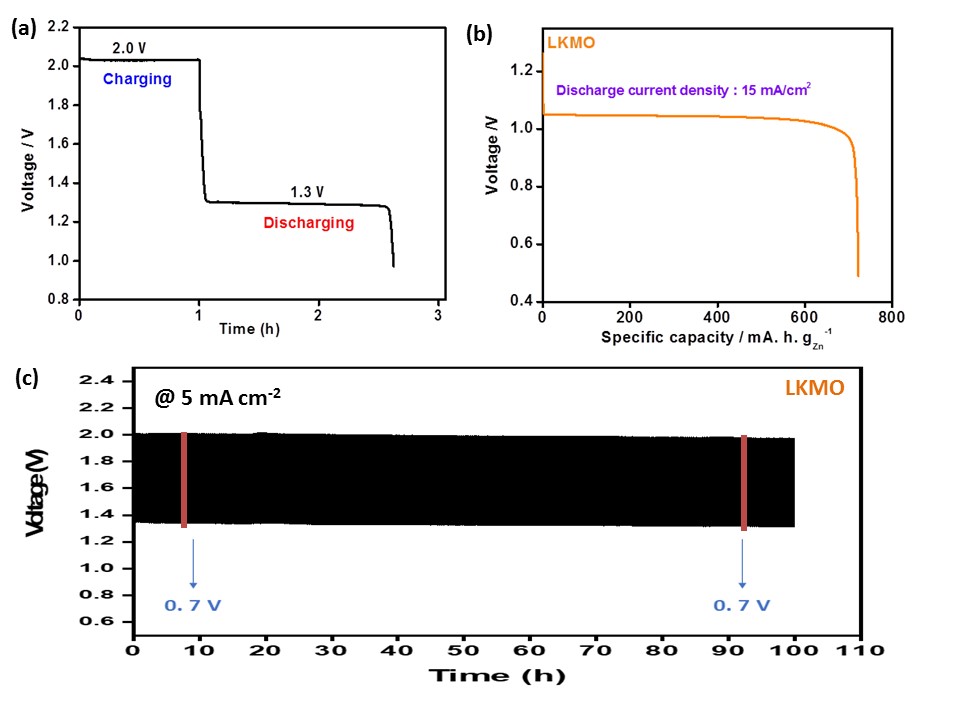
Figure 3: Charge-discharge cycling performance showing exceptional stability over 100 hours.
4. Beyond Batteries: Organocatalysis
In a separate study, I extended the utility of LKMO to the pharmaceutical sector.
- Application: Selective reduction of $\alpha,\beta$-unsaturated carbonyl compounds (Chalcones).
- The Win: Achieved 100% conversion at 120°C/7 bar $H_2$, outperforming standard $LaSrMnO_3$ (LSMO).
- The Science: The K-substitution exposes active $Mn$ sites on the surface, whereas Sr-substitution tends to form an inert $SrO$ passivation layer.