← Back to Portfolio

Green Hydrogen & Nanodevice Fabrication

From Chiral Ni-Au catalysts to Single Nanorod devices: Bridging synthesis with device engineering.

1. Chiral-Induced Spin Selectivity (CISS)

At the Weizmann Institute, I investigated the role of electron spin in water splitting. By coating Nickel electrodes with chiral molecules, we achieved a 10% increase in Hydrogen Evolution Reaction (HER) efficiency.


2. Novel Synthesis: Dynamic Hydrothermal (DH)

Standard hydrothermal methods often yield large, uncontrolled crystals due to diffusion limitations. To solve this, I developed a proprietary “Dynamic Hydrothermal” (DH) protocol involving in-situ stirring at high temperatures ($265^{\circ}C$).
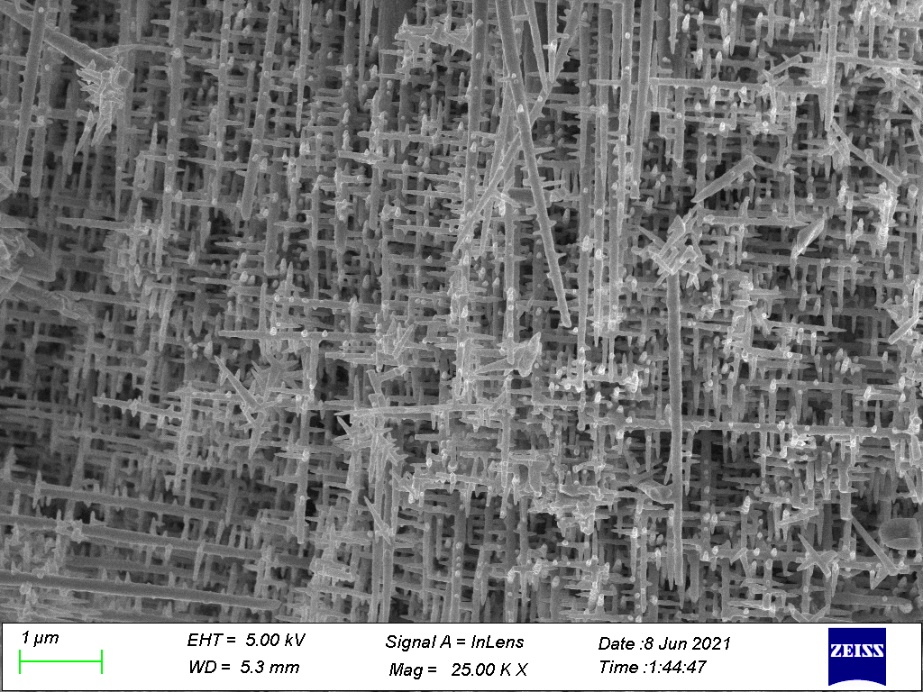
  • The Breakthrough: This process successfully stabilized LKMO Nanorods and truncated cubes—morphologies that were previously impossible to achieve via static methods.
  • Why it Matters: High-aspect-ratio nanorods provide ideal pathways for electron transport, crucial for next-gen device applications.
LKMO Nanorods

Figure 1: SEM micrographs of high-aspect-ratio LKMO nanorods obtained via the novel DH protocol.


3. Single Nanorod Device Fabrication

To understand the intrinsic transport properties of these nanorods, I fabricated single-particle devices.

Fabrication Protocol

  1. Dispersal: Nanorods were dispersed on $Si/SiO_2$ wafers with alignment markers.
  2. Lithography: Used Electron-Beam Lithography (EBL) to pattern sub-100nm contacts on individual rods.
  3. Deposition: Orion Sputtering was used to deposit Pt/Au contacts.
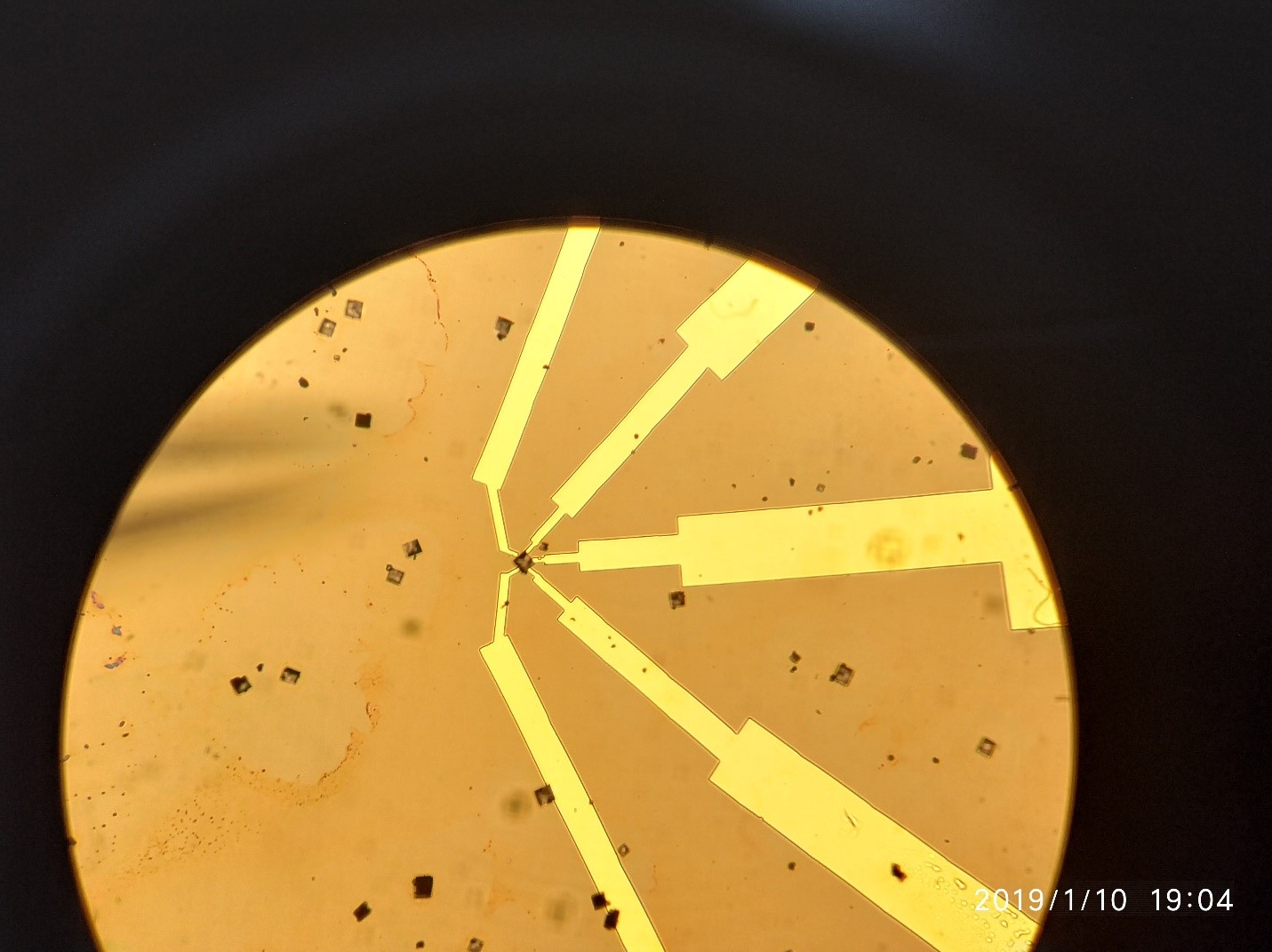
5 Probe Device

Fig A: Five-probe device coupling photolithography and FIB-SEM.
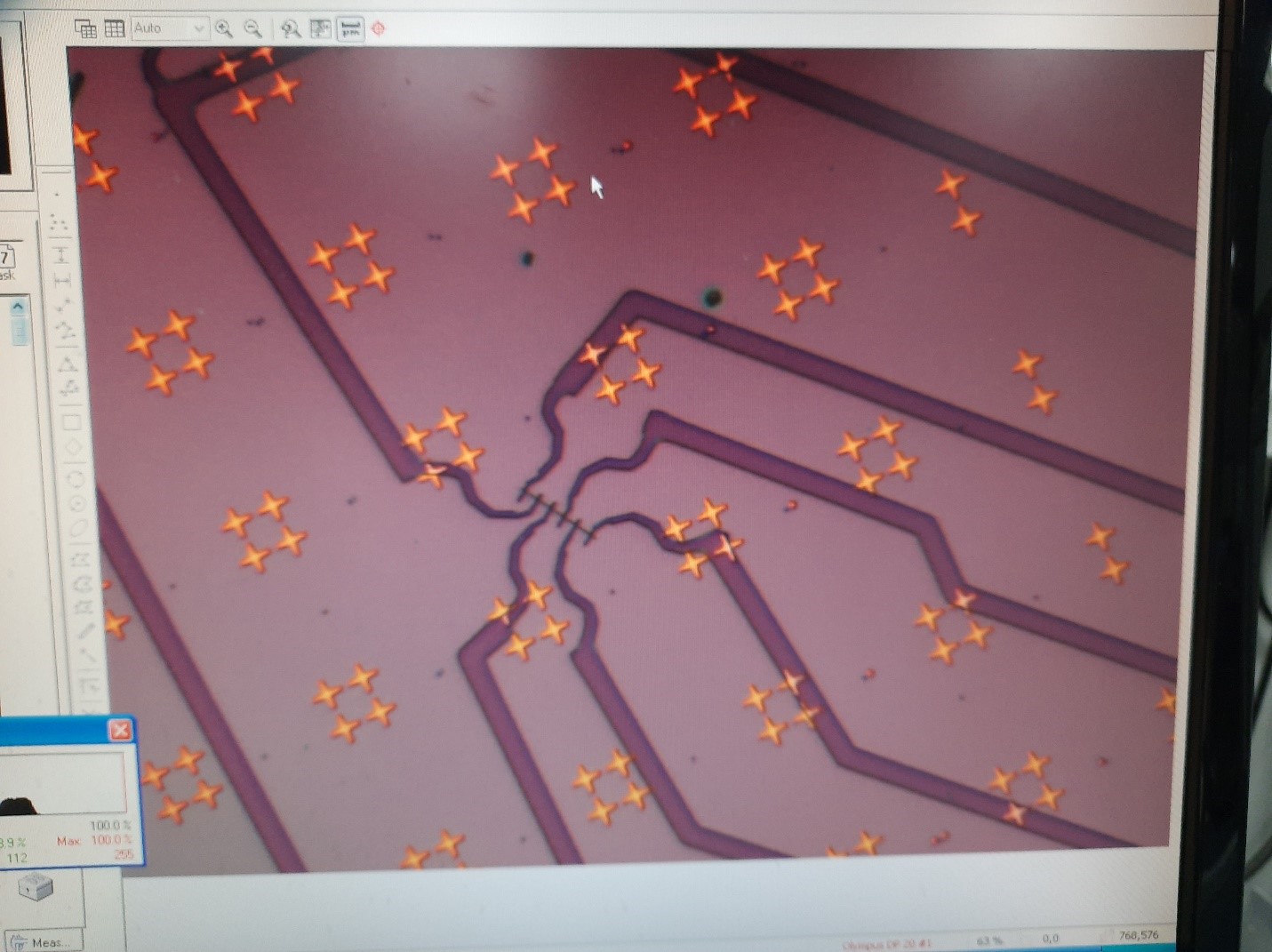
6 Probe FET

Fig B: Six-probe FET on a single LKMO nanorod.

Results

  • Yield: Achieved an 80% device yield rate through optimized resist baking and development protocols.
  • Transport Physics: The devices allowed us to characterize the metal-semiconductor junction and carrier mobility in perovskite nanostructures.
← Previous Project Photocatalysis: Chemically Hard Doping in ZnO
Next Project → Multifunctional Perovskites: From Batteries to Green Pharma