Dr. Vishal Kotha
Materials Scientist · Scientist-B, BPCL Corporate R&D
I design defect-engineered perovskite electrocatalysts for industrial green hydrogen — from the atomic scale to the plant floor.
Research Vision →
Excellence, Impact & Implementation — my fellowship-framed research programme for green hydrogen.
For CollaboratorsResearch & Projects →
Perovskite electrocatalysis, spin-selective chemistry, and industrial electrolyzer scale-up.
For StudentsStart Here →
Test your science with the quiz, read the blog, and send me any doubt — I answer every one.
Touch My Research
Loading crystal…
LaMnO₃ perovskite (ABO₃) — gold: La³⁺ (A-site) · blue: Mn (B-site) · red: O²⁻ octahedron. Drag to rotate.
This is the actual crystal family from my doctoral work. Curious why imperfection makes it better? Read the story or test yourself.
Research Vision
"The next generation of energy solutions will not come from the lab bench alone, nor from the plant floor, but from the synthesis of both."
My work operates at the intersection of Condensed Matter Physics and Industrial Scale-Up. As Scientist-B at BPCL Corporate R&D (CRDC), I lead the alkaline water electrolyzer project for green hydrogen — integrating industrial reality with advanced frameworks (Spintronics/DFT) across commercial OER/HER electrocatalysis, H₂S valorization, and hydrogen combustion safety.
🔋 Energy Storage
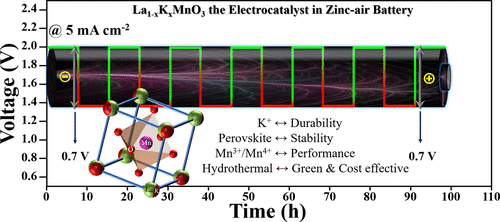
Innovated Zinc-Air Batteries using K-substituted Perovskites, achieving stability over 1000 cycles via defect engineering.
💧 Green Fuels
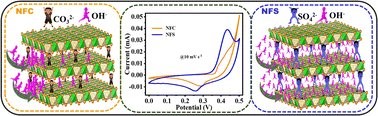
Pioneered Chiral Ni-Au Electrocatalysts for HER, utilizing electron spin to boost efficiency by 10%.
🏭 Industrial Electrolysis
Leading alkaline water electrolyzer development at BPCL-CRDC — from commercial OER/HER catalysts to hydrogen process safety.
Recent Publications
Selected peer-reviewed articles from 11+ publications.
Featured Research
1. Tailoring Perovskites for Next-Gen Energy Storage →
Developing highly active bifunctional electrocatalysts using K-substituted Lanthanum Manganite.
2. Green Hydrogen & Nanodevice Fabrication →
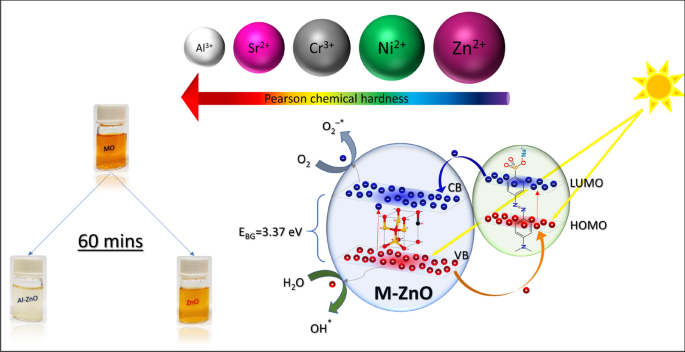
From Chiral Ni-Au catalysts to Single Nanorod devices using Dynamic Hydrothermal synthesis.
3. Computational Materials Science: Boron Carbide →
Ab-initio DFT calculations on the failure mechanisms of bulletproof armor materials.